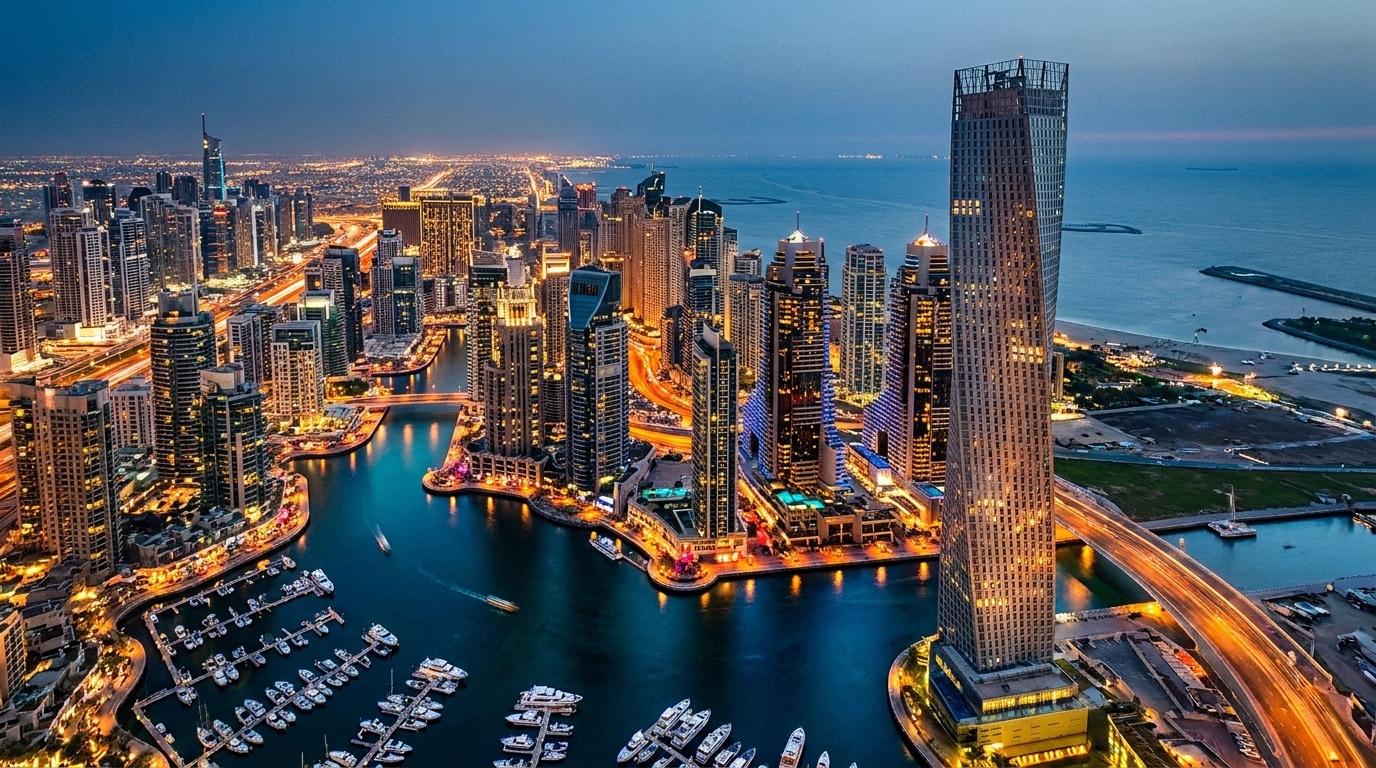
The UAE has become one of the most searched property markets in the world, and for straightforward reasons: full foreign ownership in designated areas, no annual property tax, rental yields that outpace most global cities, and a residency system that rewards investors. But a good market does not make every purchase a good investment.
This guide walks through how buying works, what it really costs, and how experienced investors approach the market.
Can foreigners own property in the UAE?
Yes — outright. Since 2002, foreign nationals can buy, own, sell, and lease property with full ownership rights in designated freehold areas. In Dubai these include most of the communities international buyers know: Dubai Marina, Downtown Dubai, Palm Jumeirah, Jumeirah Village Circle, Business Bay, Dubai Hills Estate, and dozens more.
Ownership is registered with the Dubai Land Department and you receive a government-issued title deed. There is no leasehold expiry to worry about in freehold zones and no requirement to be a resident to buy.
Why investors choose the UAE
- No annual property tax and no tax on rental income at the personal level
- No capital gains tax when you sell
- Strong gross rental yields — affordable communities commonly produce noticeably higher yields than prime districts, and the market as a whole compares well with London, Singapore, or New York
- Residency through investment — property worth AED 750,000 can support a two-year investor visa, and AED 2 million unlocks the ten-year Golden Visa
- A regulated market — escrow accounts for off-plan projects, a public land registry, and an active regulator (RERA) in Dubai
The buying process, step by step
1. Define the goal before the property
Rental income, capital growth, a future home, or visa eligibility lead to different shortlists. A studio in a high-yield community and a family villa in an established suburb are both good purchases — for different investors.
2. Set a realistic total budget
On top of the purchase price, budget roughly 6 to 8 percent for transaction costs: the 4% Dubai Land Department transfer fee, around 2% agent commission on ready property, trustee and admin fees, and mortgage arrangement costs if you are financing.
3. Choose ready or off-plan
Ready property earns rent from day one and lets you inspect exactly what you are buying. Off-plan offers lower entry prices and staged payment plans, in exchange for construction-period risk. Both are legitimate strategies; the right one depends on your cash flow and timeline.
4. Make the offer and sign the agreement
For ready property, the standard process runs through a signed sale agreement, a 10% deposit, a no-objection certificate from the developer, and final transfer at a trustee office, where the title deed moves into your name.
5. Register and hand over
The Dubai Land Department registers the sale and issues your title deed. If the property is tenanted, the tenancy transfers with it; if not, you can lease it, live in it, or resell.
What returns should you actually expect?
Headline numbers vary with the market cycle, so treat any specific figure as a snapshot rather than a promise. As a general pattern in Dubai:
- Affordable and mid-market communities tend to deliver the strongest rental yields
- Prime and waterfront districts trade some yield for stronger long-term capital appreciation and liquidity
- Short-term holiday lets can outperform long-term leases in tourist-heavy areas, at the cost of more management effort and regulation to follow
Net yield is what matters: subtract service charges, management fees, and realistic vacancy from the gross figure before comparing properties.
The risks, honestly
- Cycles are real. Dubai's market has corrected before. Buying quality assets you can hold through a downturn matters more than timing the peak.
- Oversupply in pockets. Some districts absorb new inventory slower than others. Established communities with proven rental demand are more forgiving.
- Developer selection. For off-plan, the developer's delivery track record is the single most important filter. Escrow protection reduces, but does not remove, execution risk.
- Service charges. High annual charges can quietly halve a yield. Always check them before you buy.
Frequently asked questions
Do I need to live in the UAE to buy?
No. You can buy remotely, and many investors complete the entire process with a power of attorney.
Can I get a mortgage as a non-resident?
Yes, several UAE banks lend to non-residents, typically at lower loan-to-value ratios than residents receive.
Is rental income taxed?
There is no personal income tax in the UAE. Your home country may tax foreign rental income, so check your local rules.
Start with your goals, not a listing
The mistake most first-time UAE investors make is starting with a project brochure instead of a plan. Chat with dAIr — tell it your budget and what you want the investment to do, and it will match you with properties that fit, explain the trade-offs, and connect you with a human advisor when you are ready.